
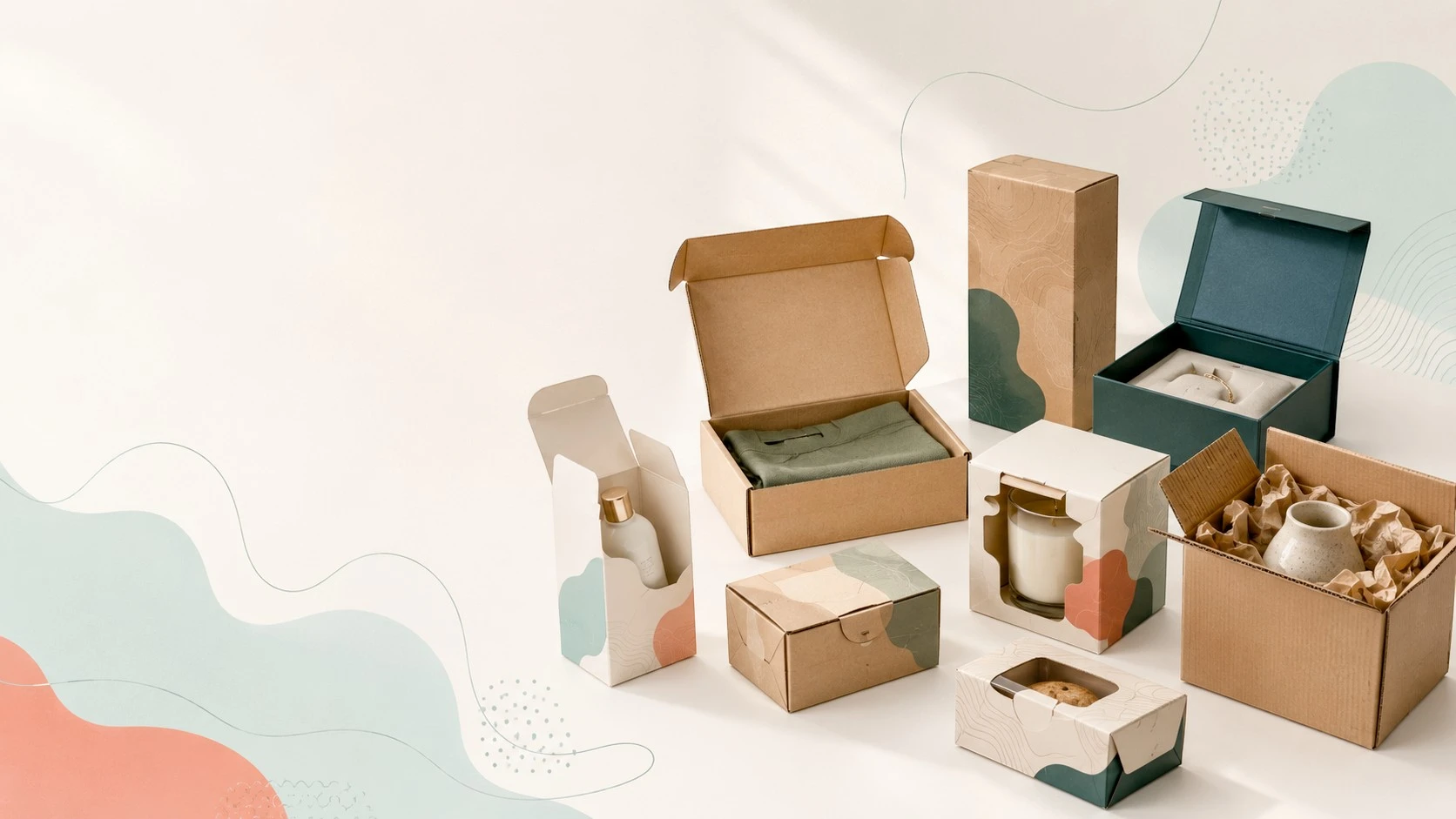
The best packaging is the lightest practical system that protects the product, works for the sales channel, communicates the right brand position, and can be produced at a sensible cost. Start with the item’s dimensions, weight, shape, value, and fragility. Then consider whether it will sit on a retail shelf, travel through parcel networks, ship in bulk, or arrive as part of a subscription. Only after those decisions should you choose the box style, board, insert, print, and finish.
Fit follows function
Start with the product’s size, weight, shape, value, and fragility before selecting a box style.
Retail and shipping differ
Shelf presentation, parcel protection, wholesale efficiency, and subscription unboxing create different requirements.
Control movement
Outer strength, internal retention, and surface protection should work together as one packaging system.
Start With the Product, Not the Box
A common packaging mistake is choosing a style because it looks attractive and then trying to make the product fit inside it. A better approach is to define what the package must do before deciding how it should look.
When choosing packaging for a product, examine six basic factors. Together, they determine whether you need a light folding carton, a corrugated mailer, a strong shipping box, a rigid presentation box, or a combination of inner and outer packaging.
Size and Shape
Record the product’s length, width, and height in its final packed orientation. Include caps, pumps, handles, cables, wrapping, or bundled accessories.
Weight
Heavier products place more pressure on the base, corners, seams, and insert. Board strength matters more as the packed weight rises.
Fragility
Glass, ceramics, electronics, delicate finishes, pumps, and multi-piece sets may need fitted retention, cushioning, or a stronger outer box.
Sales Channel
Retail packaging must communicate quickly on a shelf. Ecommerce packaging must survive handling. Wholesale packaging must pack and stack efficiently.
Product Value
A high-value product often justifies stronger construction, more controlled presentation, and a more refined opening experience.
Regulatory Needs
Food, cosmetics, wellness products, and other regulated categories may require specific information, warnings, panel space, or suitable materials.
Cartor organizes its packaging solutions by industry, which is helpful when you know the product category but are still deciding which structure and material are suitable.
How to Choose Packaging by Product Type
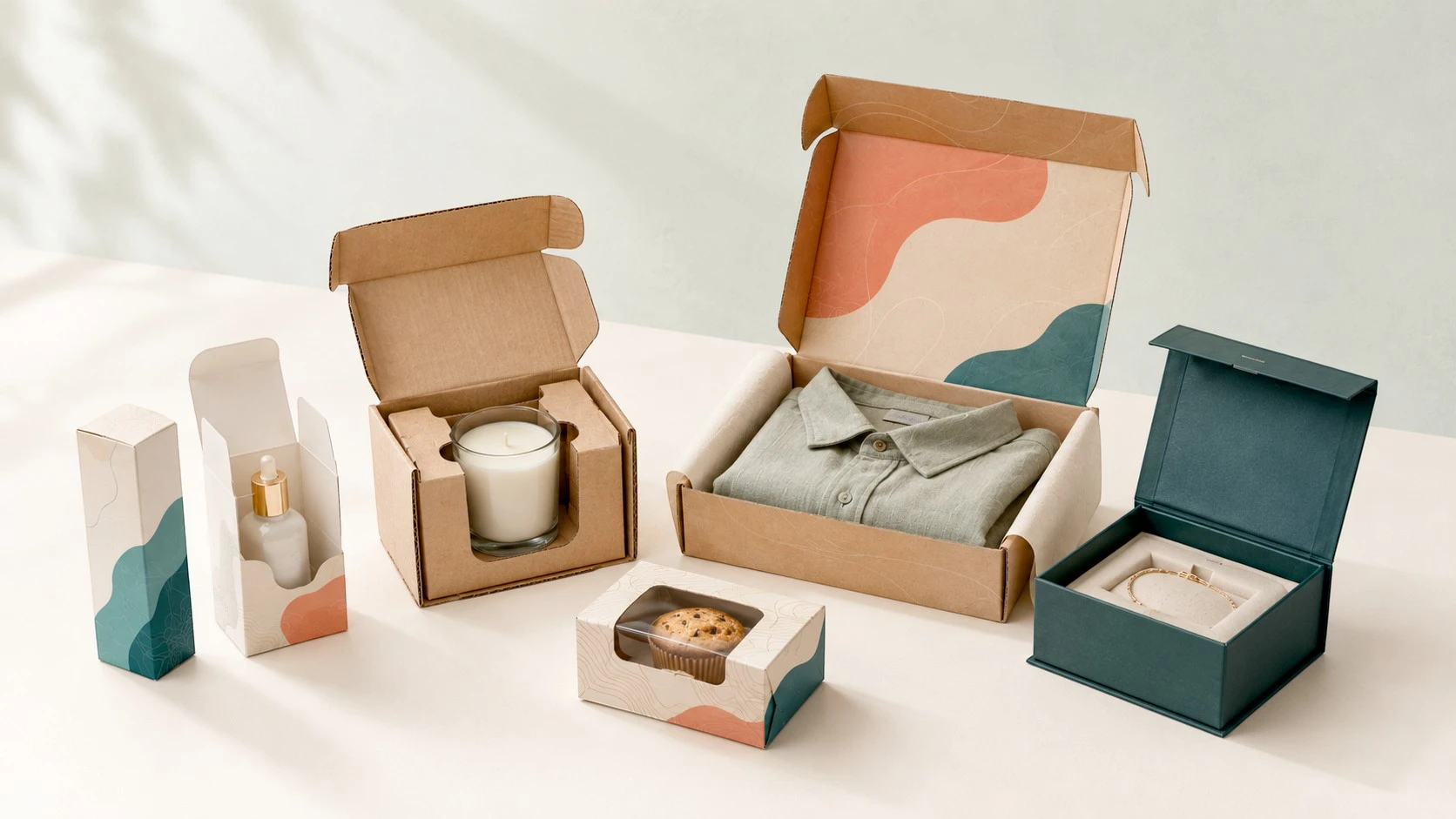
Different products create different packaging problems. A shirt needs neat folding and presentation. A candle jar needs impact protection and a secure base. A cosmetic carton needs enough printable space for branding and product information. A subscription kit needs organized compartments and a controlled reveal.
The table below provides a practical starting point. The final specification should still be based on actual dimensions, packed weight, distribution conditions, and whether the box is primary packaging, outer retail packaging, or a shipping container.
| Product type | Main packaging need | Practical starting point | When to add more protection |
|---|---|---|---|
| Cosmetics and skincare | Clean presentation, accurate fit, printable panels, protection for bottles or jars | Folding carton for light products; corrugated mailer for ecommerce; fitted insert for sets | Add retention around glass, pumps, droppers, or products with delicate caps |
| Candles and glass jars | Impact protection, base support, limited movement | Strong paperboard for retail cartons; corrugated packaging for shipping | Use a fitted insert, divider, or cushioning when the jar can shift or strike the outer wall |
| Apparel and accessories | Neat folding, moisture awareness, branding, efficient shipping size | Mailer box, folding carton, two-piece box, or rigid box depending on price position | Add tissue, a belly band, or an insert when presentation is part of the experience |
| Food and bakery items | Product fit, cleanliness, ventilation or grease resistance where needed | Product-specific paperboard structure designed for serving, display, takeaway, or outer packaging | Confirm whether the material will touch food directly and select appropriate barriers or liners |
| Electronics and accessories | Movement control, scratch protection, organized parts | Corrugated or rigid outer box with a die-cut tray, divider, or cushioning system | Add anti-scratch wrapping and stronger retention for screens, polished surfaces, or sensitive components |
| Jewelry and gift products | Premium scale, security, small-item retention, presentation | Rigid, two-piece, drawer, or compact folding carton with a fitted insert | Use a secure holder when small items can move, tangle, or disappear under tissue |
| Subscription and multi-item kits | Organization, repeat packing, protection, unboxing sequence | Corrugated mailer with compartments, dividers, or a custom insert | Add separate wells or dividers when products differ in height, weight, or fragility |
Important: Paper-based outer packaging is not automatically suitable for direct contact with every food, cosmetic formula, liquid, or sensitive product. Confirm the complete packaging requirement before approving the material and structure.
Match the Packaging to the Sales Channel
The same product may need different packaging depending on where and how it is sold. A candle displayed in a boutique may use a polished folding carton. The same candle shipped to a customer may also need a corrugated outer box and internal protection. One package can sometimes serve both roles, but it should be tested as a complete system.
Retail packaging
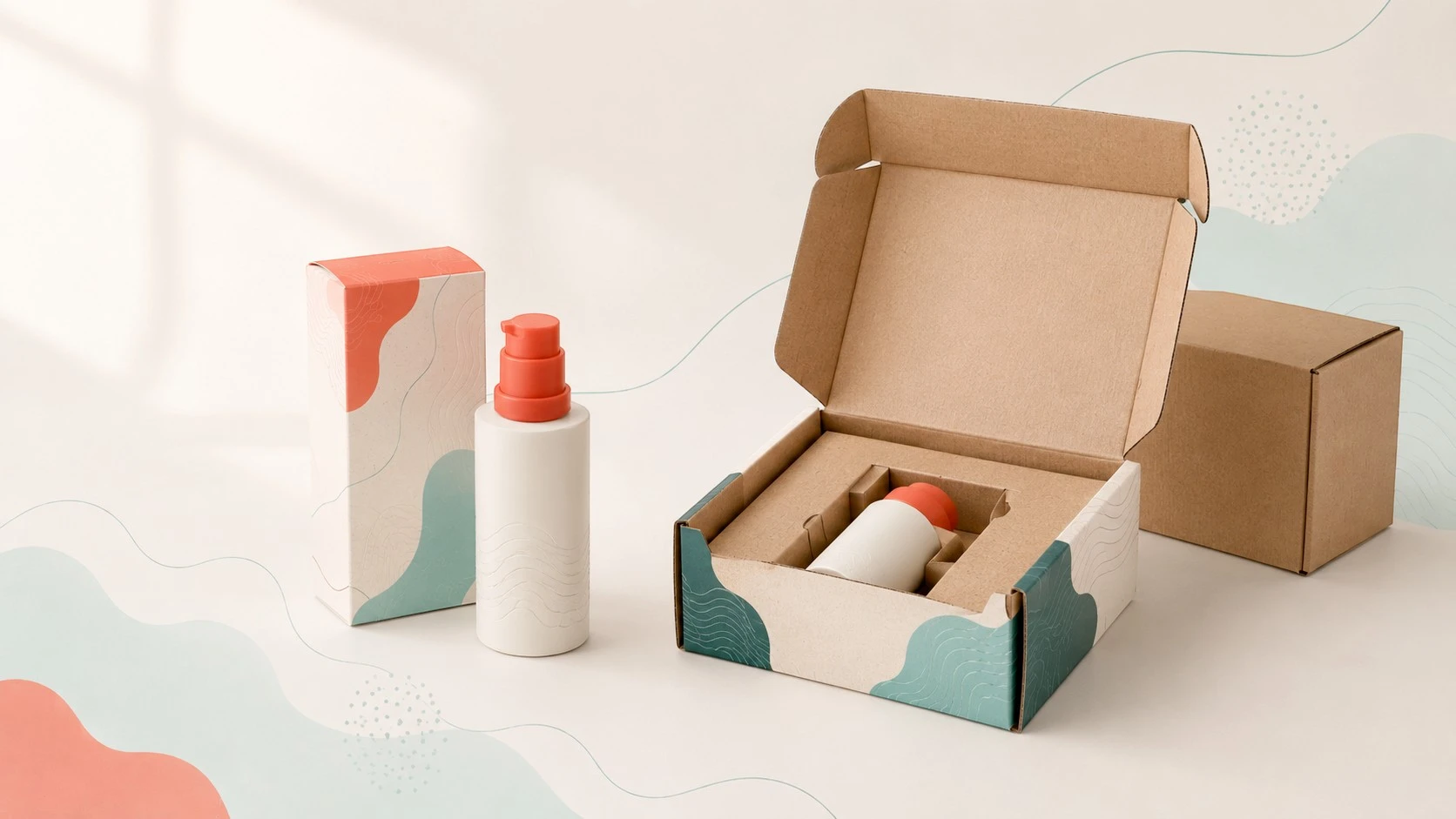
Retail boxes need to help shoppers understand the product quickly. The front panel, product name, brand colors, claims, window placement, barcode area, and legally required information all compete for limited space. The structure should also stand cleanly, resist shelf wear, and fit the product without looking oversized.
For a product sold mainly in stores, prioritize shelf presence, readable information, stackability, tamper awareness where relevant, and a finish that matches the brand’s price position.
Ecommerce packaging
Ecommerce boxes face drops, vibration, compression, sorting equipment, vehicle movement, weather exposure, and repeated handling. Attractive printing still matters, but the first responsibility is to help the product arrive safely.
For online orders, consider the packed weight, travel distance, carrier network, empty space, closure security, and whether the product needs a separate retail carton inside the shipping package. A right-sized box can reduce movement and unnecessary shipping volume while keeping the unboxing experience intentional.
Subscription, influencer, and PR packaging
These packages usually contain several items and are judged heavily on presentation. Custom mailer boxes are a practical starting point because they can combine corrugated protection, inside printing, organized inserts, and a clean opening sequence.
The design should account for the order in which products are seen, how easily each item can be removed, and whether the package will still look organized after transport.
Wholesale and distributor packaging
Wholesale packaging should prioritize case efficiency, stacking, labeling, handling, and repeatable packing. Decorative finishes may belong on individual retail units, while the outer master carton should focus on strength, count accuracy, scannable labels, and efficient pallet or warehouse use.
Choose Protection According to Product Fragility
Fragility is not limited to products that can shatter. A carton can fail even when the item inside remains technically usable. A pump may snap, a label can scuff, a polished surface may scratch, a cap can loosen, or a product set can arrive disorganized.
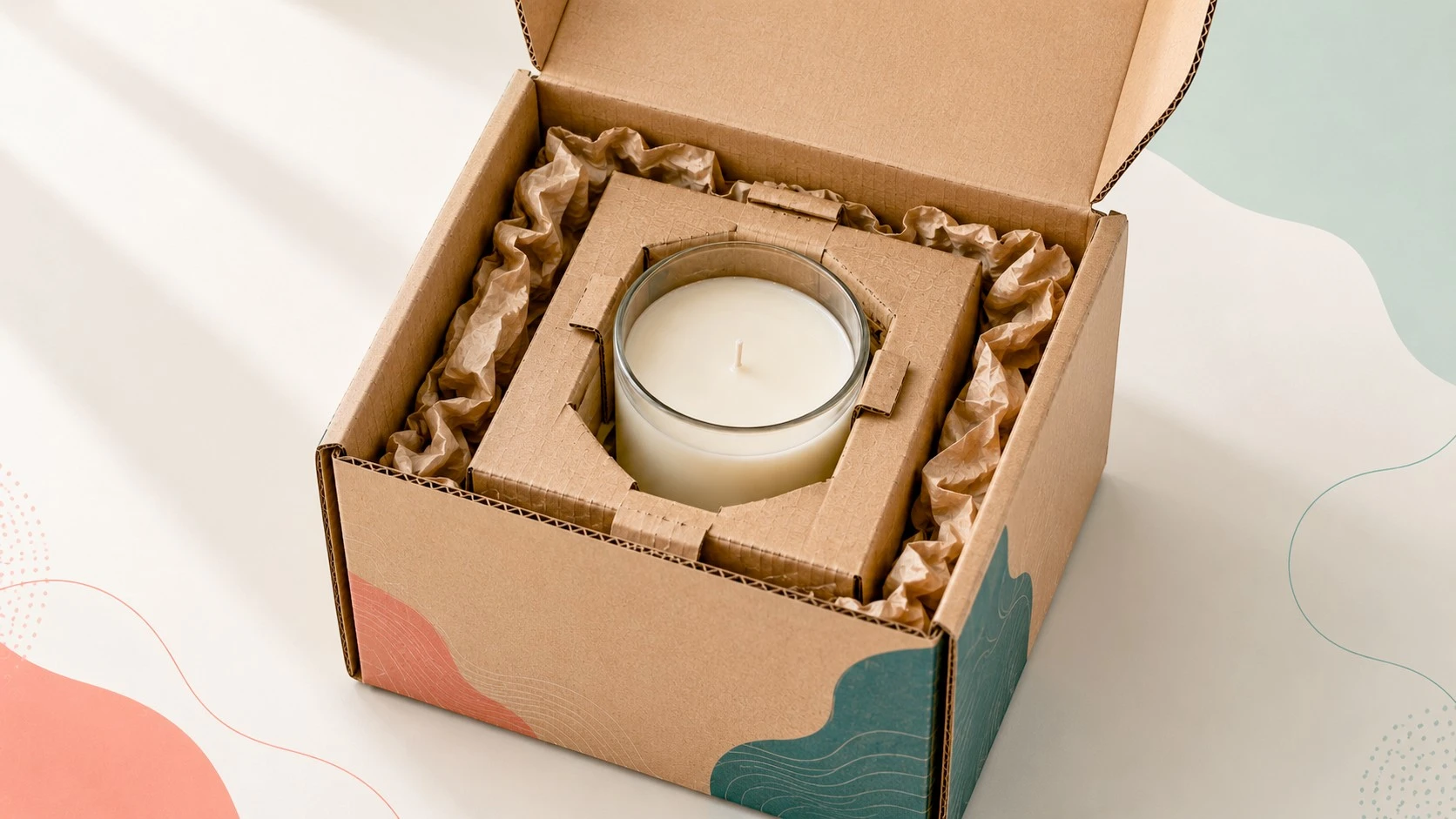
Think of protection as a system with three jobs:
Outer Strength
The box must resist crushing, puncture, seam failure, and the pressure created by the product’s weight and the packages around it.
Internal Retention
The product should not gain enough movement to strike the walls, collide with another item, or shift into an unattractive position.
Surface Protection
Wrapping, sleeves, tissue, coatings, or non-abrasive inserts may be needed to protect print, glass, polished finishes, or delicate components.
| Fragility level | Typical examples | Recommended approach |
|---|---|---|
| Low | Folded apparel, soft accessories, lightweight non-breakable items | Right-sized folding carton or mailer; prevent excess movement and protect against moisture or scuffing where needed |
| Moderate | Cosmetic tubes, boxed soaps, small accessories, packaged food products | Stronger paperboard or corrugated structure; consider a simple divider, tray, or paper wrap |
| High | Glass jars, candles, bottles, ceramics, electronics, premium multi-item kits | Corrugated outer packaging, carefully controlled clearance, fitted retention, and cushioning based on weight and handling conditions |
Do not rely on a “fragile” label as the protection system. The package itself must be able to manage normal handling. Labels can support handling instructions, but they do not replace proper board strength, fit, retention, and testing.
How to Choose the Right Packaging Material
The best material depends on what the box must carry, how it will be transported, the print result you want, and the price point of the product. Material names alone are not enough; thickness, flute profile, coating, grain direction, structure, and packed weight also affect performance.
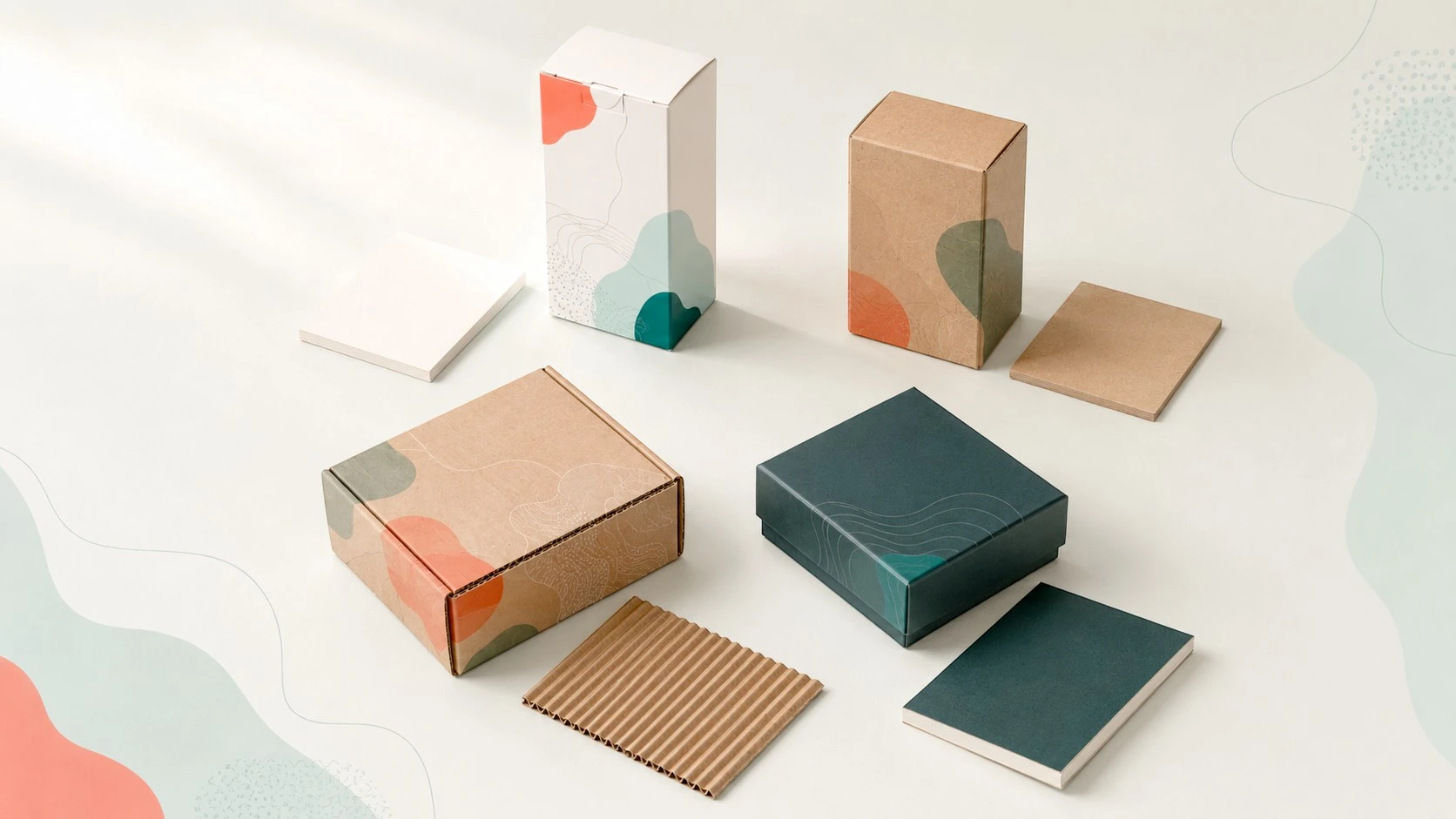
Choose performance before finish
A beautiful surface cannot compensate for a structure that bends, opens, or allows the product to move. Begin with strength and fit. Then select the print surface, color, lamination, foil, embossing, or other finish that supports the brand.
For a broader explanation of packaging roles, materials, and customization, read What Is Custom Packaging?
| Material | Works well for | Main advantage | Watch for |
|---|---|---|---|
| Cardstock or paperboard | Cosmetics, soap, lightweight retail products, small food cartons, accessories | Clean printing, efficient folding, broad range of finishes | May not provide enough shipping protection for heavy or fragile products by itself |
| Kraft paperboard | Natural, handmade, organic-looking, minimalist, and sustainability-led brands | Warm natural appearance and strong compatibility with simple printed designs | Printed colors can look different on a brown base than on white stock |
| Corrugated board | Ecommerce, mailers, shipping boxes, subscription boxes, heavier products | Strength, cushioning, stacking performance, and practical shipping protection | Flute choice and board grade should match the packed weight and print expectations |
| Rigid board | Luxury gifts, jewelry, premium cosmetics, high-value launches, keepsake packaging | Strong presentation, structure, and premium feel | Higher unit cost, storage volume, assembly needs, and often longer production planning |
Get the Box Size and Product Fit Right
A box that is too small can place pressure on the product, distort panels, damage corners, or make packing difficult. A box that is too large can increase movement, require more void fill, weaken presentation, and add unnecessary shipping volume.
Measure the actual product in the orientation in which it will be packed. For a set, arrange every item as it should appear in the final package. Include protective wrapping, inserts, instruction cards, accessories, and any clearance needed for easy packing and removal.
Internal dimensions are used to plan product fit. External dimensions matter for shipping, storage, shelving, and master-carton planning. Cartor’s guide to measuring box length, width, and height explains the difference and helps you prepare more accurate specifications.
Practical tip: Do not add random clearance to every side. The correct allowance depends on board thickness, folds, closures, wrapping, insert design, product tolerance, and how easily the item must be packed and removed.
When Does a Product Need an Insert?
An insert is useful when the outer box alone cannot keep the product in the correct position. It can separate items, create compartments, support a weak component, reduce movement, improve presentation, or make a small product feel intentional inside a larger package.
Common options include paperboard trays, corrugated dividers, die-cut holders, folded compartments, molded pulp, and foam. The choice depends on product weight, fragility, shape, sustainability goals, presentation, and budget.
Use paperboard inserts when
The product is lightweight, presentation is important, and the insert mainly needs to organize or retain rather than absorb major impact.
Use corrugated inserts when
The product needs stronger separation, edge support, stacking strength, or practical protection inside ecommerce packaging.
Consider foam when
A delicate, high-value, or irregular product needs cushioning and highly controlled placement, subject to the project’s sustainability requirements.
For multi-item kits, ecommerce orders, glass products, or premium sets, see Cartor’s custom mailer boxes with inserts for examples of fitted compartments and protective presentation.
Balance Packaging Cost With Product Protection
The cheapest box is not always the lowest-cost packaging decision. A weak or oversized package may create hidden costs through product damage, replacement shipments, excessive void fill, slower packing, higher storage needs, poor shelf presentation, or customer dissatisfaction.
At the same time, adding premium material, complex inserts, inside printing, multiple finishes, and an elaborate structure to every product can quickly make packaging more expensive than it needs to be.
Spend where the package performs a real job
- Use stronger material where the product weight or shipping environment requires it.
- Add an insert where movement creates a meaningful risk or presentation problem.
- Use premium finishes where they support brand positioning or highlight an important design element.
- Right-size the package to reduce empty space without making packing difficult.
- Standardize structures across related products when it does not compromise fit or performance.
- Compare the full packed system—not only the price of the printed outer box.
Quantity also affects cost per unit. Before requesting pricing, prepare the dimensions, quantity, product weight, preferred style, print coverage, finish, insert needs, destination, and target date. Clear specifications make quotations easier to compare.
Test the Packaging Before Full Production
A digital mockup is useful for reviewing artwork and general presentation, but it cannot fully show how the material feels, how easily the box packs, whether the product moves, or how the package performs during delivery.
For a new product, fragile item, premium launch, or large order, consider a physical sample or a short test run. Pack the real product and review:
- Product fit and removal
- Movement when the box is shaken gently
- Pressure on caps, pumps, corners, or delicate parts
- Closure security
- Print alignment and readable text
- Barcode and QR-code placement
- Insert strength and product retention
- Scuffing, cracking, or finish damage
- Packing time and assembly ease
- External dimensions and shipping efficiency
Cartor’s custom packaging process explains the path from specifications and quotation to dielines, artwork, proofs, production, quality checks, and delivery.
A Simple Packaging Decision Matrix
| Situation | Good starting structure | Likely material | Possible insert |
|---|---|---|---|
| Lightweight product sold on a retail shelf | Folding carton or sleeve | Cardstock or kraft paperboard | Usually none, unless the product needs positioning |
| Lightweight product shipped directly to customers | Mailer box or retail carton inside a mailer | Corrugated board, sometimes combined with paperboard | Paperboard or corrugated retention if movement is excessive |
| Fragile glass product sold online | Corrugated shipping or mailer box | Corrugated grade selected for packed weight and handling | Fitted corrugated, molded, or cushioning insert |
| Premium product sold as a gift | Rigid, drawer, two-piece, or premium mailer box | Rigid board, quality paperboard, or printed corrugated | Custom presentation tray or fitted holder |
| Multi-product subscription kit | Corrugated mailer with organized compartments | Printed corrugated board | Divider, die-cut tray, or multiple product wells |
| Wholesale units packed into master cartons | Individual retail units plus an efficient outer case | Paperboard units and corrugated master carton | Dividers when units can collide or shift |
Common Mistakes to Avoid
Choosing by appearance alone
A premium finish cannot repair poor fit, weak structure, or inadequate shipping protection.
Using one box for every sales channel
Retail, ecommerce, wholesale, and subscription orders place different demands on the package.
Ignoring packed weight
The product, inserts, printed materials, and accessories all contribute to the final load.
Leaving too much empty space
Oversized packaging can increase movement, material use, storage needs, and shipping volume.
Overpacking a low-risk product
Extra layers, oversized inserts, and heavy structures can increase cost without adding meaningful value.
Skipping the physical sample
A mockup can look correct while the actual package is difficult to assemble, pack, open, or ship.
Product Packaging Selection Checklist
Before asking a packaging supplier for a recommendation or quotation, collect the following information:
- Product name and category
- Exact product dimensions
- Final packed orientation
- Individual and total packed weight
- Fragility and sensitive components
- Number of products per box
- Retail, ecommerce, wholesale, or subscription use
- Primary, secondary, or shipping-packaging role
- Preferred box style, if known
- Insert, divider, or cushioning requirement
- Material or sustainability preference
- Printing coverage and brand colors
- Required product information and barcode space
- Finishing preferences
- Order quantity and repeat-order forecast
- Delivery destination and required date
With these details, a packaging specialist can recommend a more suitable structure instead of guessing from a product name or reference image alone.
Related Packaging Guides
Frequently Asked Questions
What factors should I consider when choosing packaging?
Consider the product’s dimensions, packed weight, shape, fragility, value, sales channel, shipping conditions, presentation requirements, regulatory needs, order quantity, and budget. These factors should guide the box style, material, insert, print, and finish.
What packaging is best for fragile products?
Fragile products usually need a strong outer structure, limited empty space, fitted retention, and cushioning suited to the item’s weight and sensitivity. Glass, ceramics, electronics, and delicate sets should be tested in the complete shipping configuration before a large order.
What is the difference between retail and ecommerce packaging?
Retail packaging focuses on shelf presentation, product information, branding, and easy display. Ecommerce packaging must also manage parcel handling, compression, vibration, movement, and delivery. Some products use a printed retail carton inside a stronger shipping box.
How do I choose a box size for my product?
Measure the product in its final packing orientation and include wrapping, accessories, inserts, and necessary clearance. Plan product fit using internal dimensions, then check external dimensions for storage, shelving, master cartons, and shipping.
When should I use corrugated packaging?
Corrugated packaging is a strong starting point for ecommerce shipments, mailer boxes, subscription boxes, heavier products, fragile items, and packages that need stacking or transit protection. The correct flute and board grade depend on weight, size, printing, and handling conditions.
Does every product need a custom insert?
No. An insert is most useful when a product can move, collide, tilt, tangle, or look disorganized inside the box. Lightweight products with a close-fitting carton may not need one. The insert should solve a clear protection, organization, or presentation problem.
Should I use the same packaging for retail and shipping?
Only when the structure has been designed and tested for both roles. A retail carton may look excellent but provide limited parcel protection. Many brands use a presentation-focused inner box and a stronger outer mailer or shipping carton.
Should I request a sample before ordering custom packaging?
A physical sample is especially valuable for new structures, fragile products, high-value items, complex inserts, premium finishes, or large orders. It lets you review fit, material, assembly, print, product removal, and presentation before full production.
Need Help Choosing Packaging for Your Product?
Share your product type, dimensions, packed weight, quantity, sales channel, fragility, artwork, and delivery requirements. Cartor can help you compare suitable box styles, materials, inserts, printing, and finishing options before production.
WhatsApp: +1 (332) 222-4779